
How Often Should Data Centers Be Cleaned? Cleaning Best Practices for Sensitive Tech Spaces
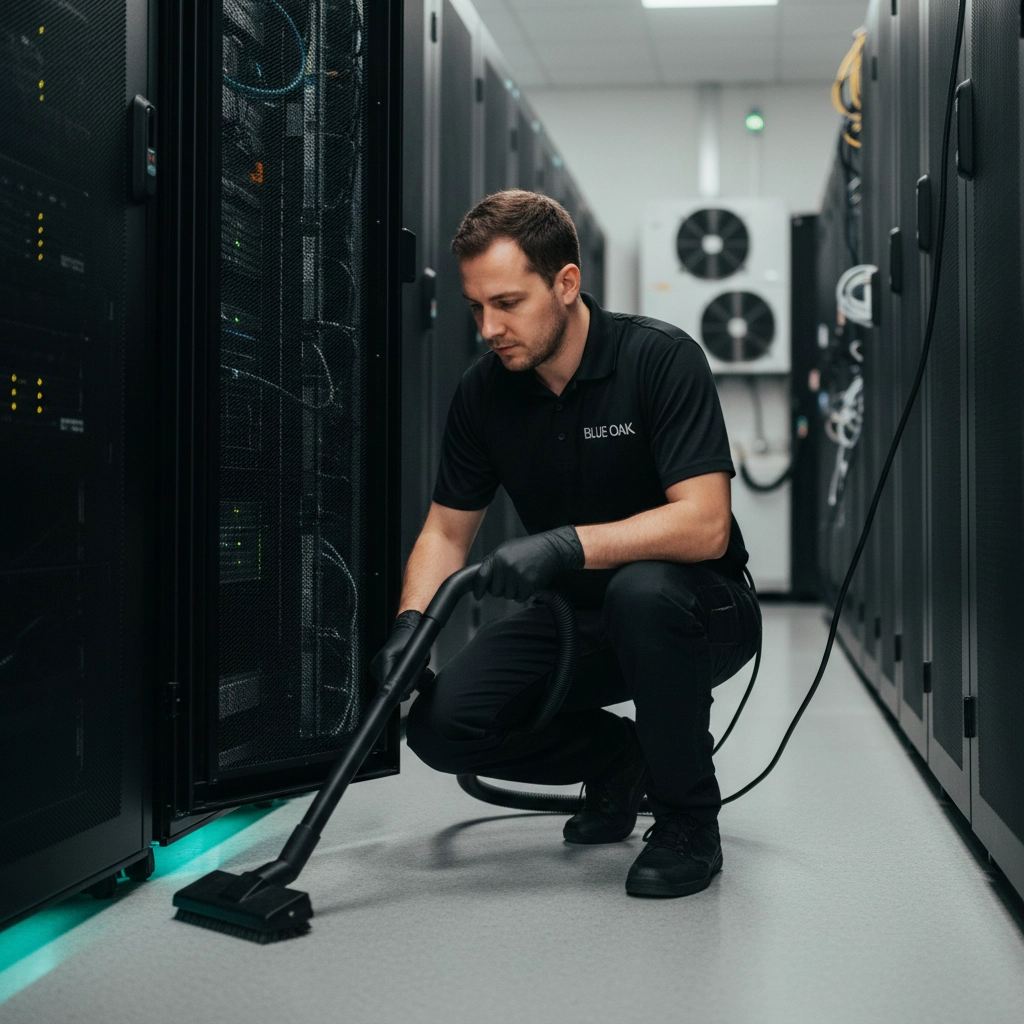
When it comes to data centers and server rooms, cleanliness isn’t just about appearances: it’s about protecting millions of dollars worth of equipment and keeping your business running smoothly. Whether you’re managing a corporate data center, a server room in a hospital setting where tailored cleaning plans are essential to protect technology, sensitive data, and patient safety, or any facility with sensitive tech equipment, understanding proper cleaning frequencies can save you from costly downtime and equipment failures.
The reality is that dust, debris, and contaminants are the silent killers of electronic equipment. They clog cooling systems, cause overheating, and can lead to catastrophic failures that bring entire operations to a halt. That’s why having a solid cleaning schedule isn’t optional: it’s essential.
Understanding Data Center Cleaning Frequencies
Different areas of your data center need attention at different intervals, and it all depends on factors like foot traffic, environmental conditions, and the criticality of your equipment.
Daily and Weekly Cleaning
High-traffic areas like entrance corridors, break rooms, and administrative spaces need daily attention. These areas see the most human activity, which means more dirt, debris, and potential contaminants being tracked in. Weekly cleaning should cover areas with lighter traffic, such as storage rooms and less frequently accessed equipment areas.
Monthly Cleaning Schedules
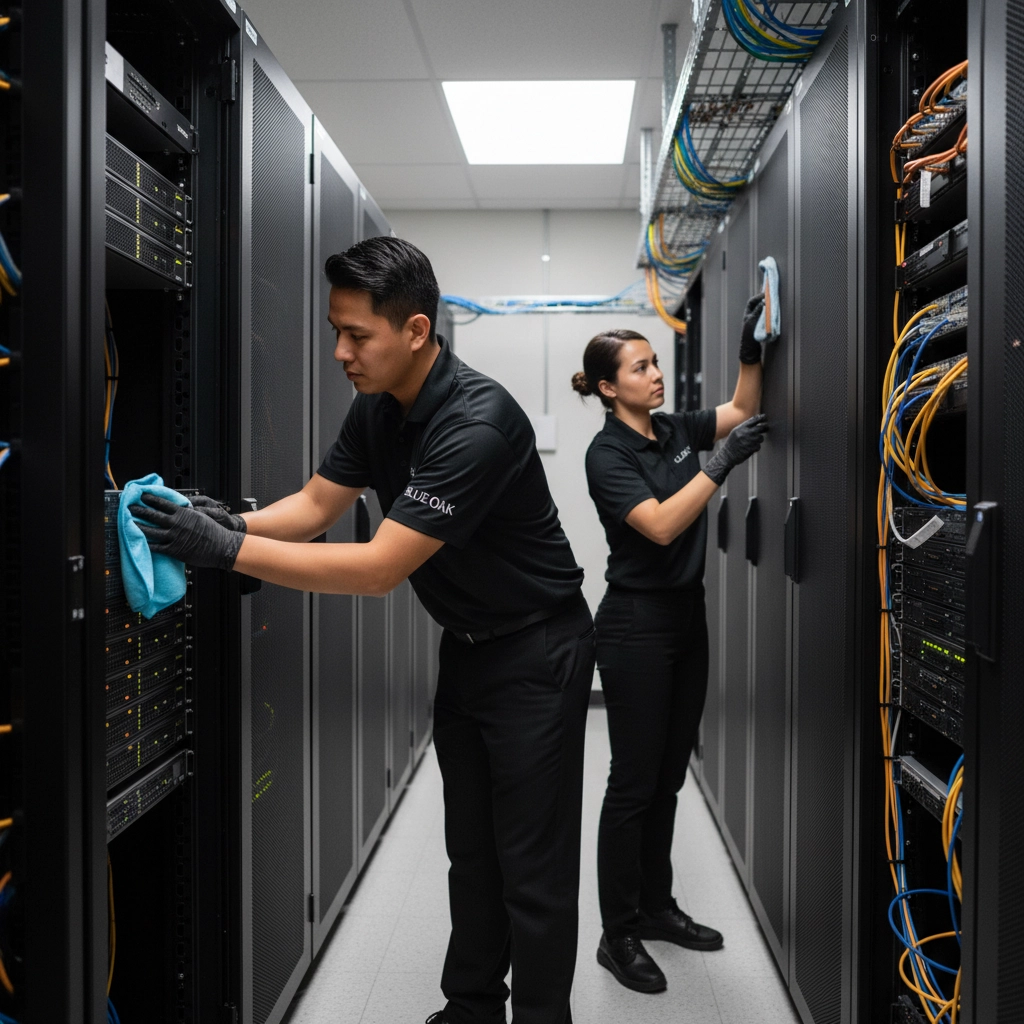
Critical equipment zones: where your most valuable servers and networking equipment live: should receive monthly cleaning. This includes thorough dusting of equipment surfaces, cleaning of accessible areas around server racks, and inspection for any signs of contamination buildup.
Quarterly Deep Cleaning
The National Fire Protection Association (NFPA 75) recommends comprehensive cleaning every three months to remove combustible dust and maintain fire safety standards. This quarterly schedule has become the industry standard for most data center environments because it strikes the right balance between thorough cleaning and operational efficiency.
During quarterly cleanings, your team should focus on:
- Subfloor areas and cable management spaces
- Ceiling plenum cleaning
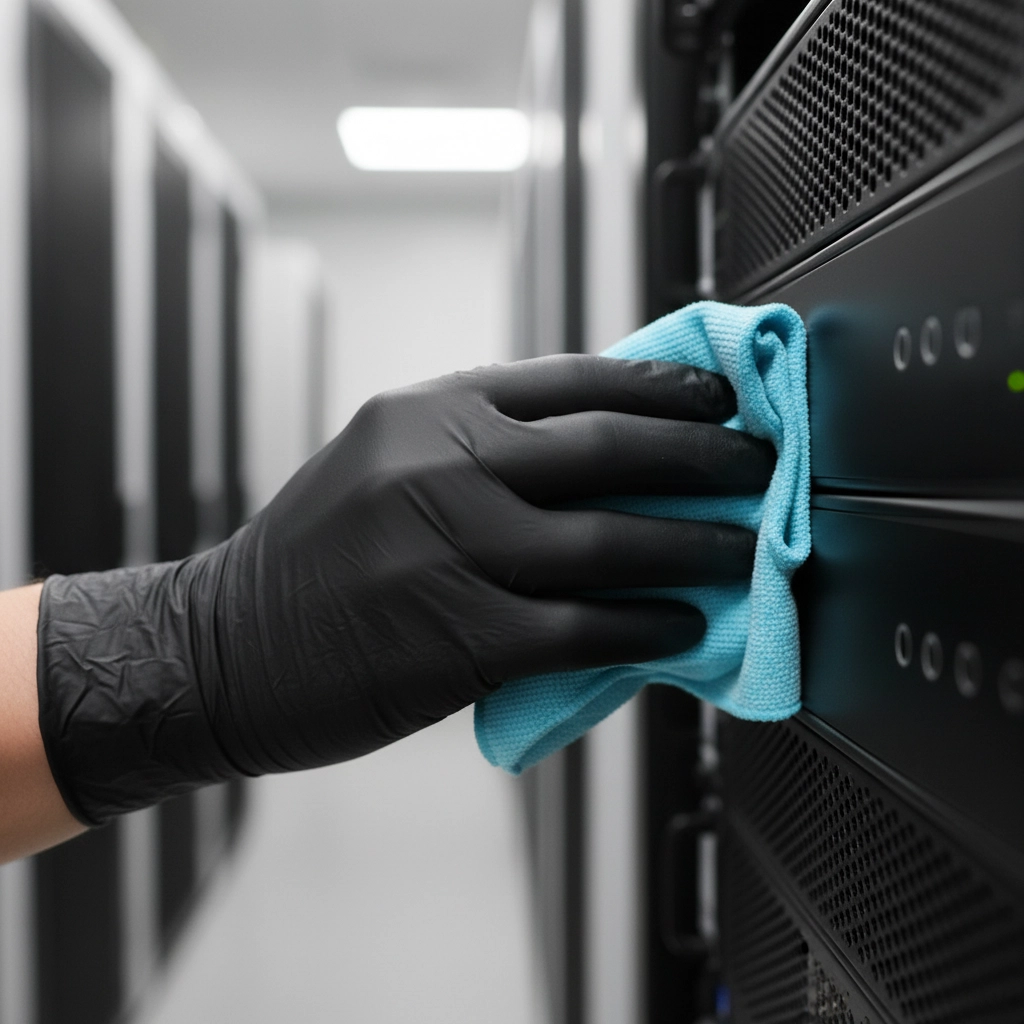
- Equipment surface cleaning with anti-static materials
- HVAC system inspection and cleaning
- Floor tile deep cleaning and maintenance
Semi-Annual and Annual Requirements
Some areas can go longer between cleanings, but they still need regular attention. Semi-annual cleaning works well for low-traffic zones and equipment areas that don’t accumulate debris quickly.
Annual deep cleaning represents the most comprehensive approach. This intensive process should target every accessible surface, including areas that are normally hard to reach during routine cleaning. Plan for a maintenance cleaning six months after your annual deep clean to address any areas that need touch-ups.
Types of Data Center Cleaning: Routine vs. Deep Clean
Routine Maintenance Cleaning
Routine cleaning keeps your data center functional between major cleaning events. This includes regular surface cleaning with anti-static wipes, debris removal from accessible areas, and visual inspections for potential contamination issues.
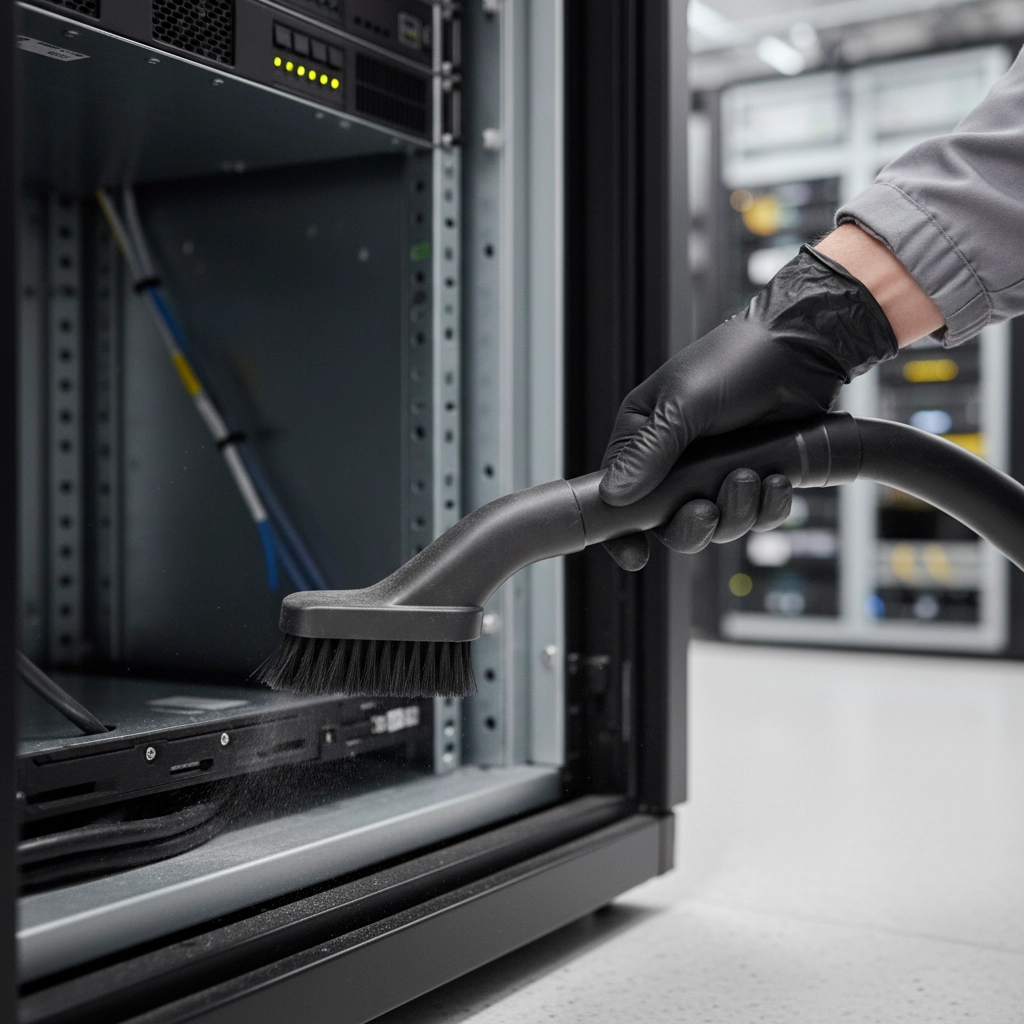
The key to effective routine cleaning is consistency. Your cleaning team should follow the same procedures each time, using equipment specifically designed for sensitive electronic environments. HEPA filter vacuums are essential: they capture small particles that regular vacuums might miss or blow around.
Deep Cleaning Operations
Deep cleaning goes beyond surface maintenance to address contamination in hard-to-reach places. This process requires specialized equipment and should be performed by trained professionals who understand the unique requirements of data center environments.
During deep cleaning, professionals will:
- Clean subfloor areas and cable management systems
- Address ceiling plenum spaces where dust accumulates
- Perform thorough equipment cleaning with appropriate anti-static products
- Clean tape libraries and backup storage areas
- Inspect and clean cooling system components
Deep cleaning typically requires some equipment downtime, so it’s important to plan these sessions during scheduled maintenance windows.
The Business Value of Regular Data Center Cleaning
Equipment Longevity and Performance
Clean equipment simply lasts longer and performs better. Dust buildup on server fans can cause temperature increases of up to 30 degrees Fahrenheit, forcing cooling systems to work harder and potentially leading to equipment failure. Regular cleaning prevents this buildup and keeps your systems running at optimal temperatures.
Fire Prevention and Safety
Data centers contain millions of dollars worth of equipment in concentrated spaces, making fire prevention critical. Dust accumulation creates combustible materials that can fuel fires or cause electrical issues. Regular cleaning removes these fire hazards and helps maintain insurance compliance.
Cost Savings and Operational Efficiency
While professional data center cleaning might cost between $6,000 to $7,000 annually for smaller facilities, this investment pays for itself by preventing equipment failures, reducing energy costs, and avoiding expensive emergency repairs. Clean equipment runs more efficiently, uses less energy, and requires fewer repairs.
Special Considerations for Different Facilities
Entertainment and Educational Facilities
Server rooms in hospitals present unique challenges because they support life-critical systems and must operate alongside clinical areas with strict infection control requirements. These environments need tailored cleaning plans that protect technology, safeguard sensitive data, and support patient safety.
Access controls, proper PPE, and electronics-safe disinfecting methods are essential, and cleaning should be scheduled to avoid disrupting clinical operations while maintaining the controlled conditions servers require.
Corporate and Industrial Data Centers
Corporate data centers typically have more controlled environments with limited foot traffic, allowing for standard cleaning frequencies. However, industrial facilities might need more frequent cleaning due to environmental factors like nearby manufacturing processes or outdoor air quality issues.
Best Practices for Data Center Cleaning
Environmental Controls
Establish clean zones and buffer areas to limit contamination from outside sources. Always unbox and clean new equipment outside the data center before installation. Require all personnel to clean footwear before entering sensitive areas, and consider implementing dedicated paths for equipment movement.
Equipment-Specific Protocols
Different types of equipment need different cleaning approaches. Servers and networking equipment should be cleaned with anti-static materials to prevent electrical discharge. Floor areas and underfloor plenums need HEPA vacuum cleaning to remove particles without redistributing them into the air.
Storage areas, including tape libraries, require gentle cleaning methods that won’t damage sensitive media or mechanisms.
Professional Service Management
When working with professional cleaning services, establish clear expectations and detailed service agreements. Check references from other data center clients and ensure your cleaning team understands the unique requirements of electronic environments.
Professional cleaners should use LEED-compliant products and equipment designed specifically for sensitive electronic spaces. They should also understand protocols like emptying vacuum equipment outside the data center and limiting the number of floor tiles removed simultaneously during cleaning.
Training and Documentation
Whether you’re using in-house staff or professional services, proper training is essential. Everyone involved in data center cleaning should understand contamination prevention, proper equipment usage, and emergency procedures.
Maintain detailed documentation of cleaning schedules, procedures, and any issues discovered during cleaning. This information helps track the effectiveness of your cleaning program and identifies areas that might need attention.
Creating Your Cleaning Schedule
The right cleaning schedule depends on your specific environment, equipment, and operational requirements. Start by assessing your facility’s unique needs:
- Traffic patterns and access frequency
- Environmental conditions and air quality
- Equipment density and heat generation
- Budget and operational constraints
Work with cleaning professionals who understand data center requirements and can help you develop a customized schedule that balances thorough cleaning with operational efficiency.
Remember that consistency is key. A regular cleaning schedule prevents small issues from becoming major problems and helps maintain the controlled environment your equipment needs to perform reliably.
Ready to Protect Your Investment?
Don’t wait until dust buildup causes equipment failures or fire safety issues. At Blue Oak Commercial Cleaning, we understand the unique requirements of data centers and sensitive tech environments. Our trained professionals use specialized equipment and LEED-compliant products to keep your facility running smoothly.
Whether you’re managing a corporate data center, a server room in a hospital setting where tailored cleaning plans are critical, or any space with sensitive equipment, we can develop a customized cleaning plan that fits your operational needs and budget.
Contact Blue Oak Commercial Cleaning today to schedule a consultation and learn how proper data center cleaning can protect your investment and keep your business running without interruption.